
For small and mid‑size business leaders
Put AI to work,
starting tomorrow morning.

Most AI advice for small and mid-size businesses comes from one of two places: marketers who have never met a payroll, or technologists who have never faced a customer.
We've done both.
There's no shortage of AI advice.
That's the problem.
So how do you know which ones are worth the money?
Every week there's a new tool, a new post, a new guy on YouTube telling you what you should be doing. Most of it isn't wrong. It's just not for you. None of it accounts for the fact that whoever owns AI at your company is learning it the same week you are, and the work doesn't stop while you figure it out.
So you end up with a folder of bookmarks and nothing running in your business.
We'll help you sort it. What's worth your time this quarter, what can wait, and what to leave alone.
The free advice isn't wrong. It's just not about your business. This is.
Build your AI chief of staff
A daily to-do list. A weekly scoreboard. Everything remembered.
A full day, live. You build a real AI agent, not a chatbot, and you leave with it running. You don't watch a demo. You build it, live, with us.
By the end of class it knows your customers, your people, and how you write, and it doesn't forget any of it when you close the laptop. It tracks who owes you what, drafts replies in your voice, catches scheduling conflicts you'd otherwise miss, and flags what is about to slip, so you're not the only one holding it all in your head.
What tomorrow morning looks like
7:40 AM. Coffee in hand. You open it up.
It has already read your inbox and your calendar. It doesn't hand you the raw pile. It tells you what needs you.
"There are five things that need your attention.
- The Delgados emailed at 11 last night. They're not happy with what you sent Friday and they want a call today.
- The vendor just moved your delivery date three weeks. You committed to Monday.
- The bank meeting is Thursday. You told me to have the scoreboard ready by Tuesday. Drop in last month's export and I'll build it.
- And the interview you booked for 2 PM lands right on top of the weekly team meeting. Should I reschedule?
- Dave still hasn't responded to your email. Should I draft a follow-up?"
You say: draft an apology to the Delgados and get me on a call with them today, ask the vendor what they can deliver by Monday, here's the export for the bank, and yes, move the interview. Offer tomorrow, same time. And draft the follow-up to Dave.
By the time you've finished your coffee, drafts are ready, sounding like you because it learned from the emails you actually send. Six weeks of scoreboards are in one file, revenue and average sale both flagged, ready to print.
Five minutes. Everything that needs you, nothing that goes out without you.
What you will build in class
No coding, no technical background required. You build it step by step, on your own screen.
What it can and cannot do
It's an agent, not a chatbot. You don't have to prompt it every time. It works a task through on its own, across your inbox, your calendar and your files, and comes back with the thing done. It also runs on a schedule, so the daily report is written before you sit down.
It reads what you connect: your inbox and calendar, your texts, and wherever else your team writes things down. It won't act without you saying so, it won't touch anything you haven't connected, and it won't pretend to know a number it wasn't given. Every draft, every list, every routing rule stays visible and editable. And it doesn't take weekends off: what you told it in March is still there in October.
How this is different from other AI chief of staff programs
Upcoming dates are posted here as classes are scheduled.
Upcoming classes
All datesBest practice: bring your leadership team.
Ask about the next class* Private sessions are run for one company and built around its team and its problems. Ask about one for yours.
“It was eye‑opening.”
 Dominic ArsenaultDomination Home Services
WHAT PEOPLE SAY

“I can now organize my day in one place instead of multiple platforms.”

“Whether you’re new to AI or experienced, you’ll learn something new. Everyone in the class got value.”

“I created an agent that instantly showed us $6,000 in refunds we should be getting back. It was eye‑opening.”
Once we know your business, there are two deeper ways we work with a single company.
Two people who have done this from opposite ends.
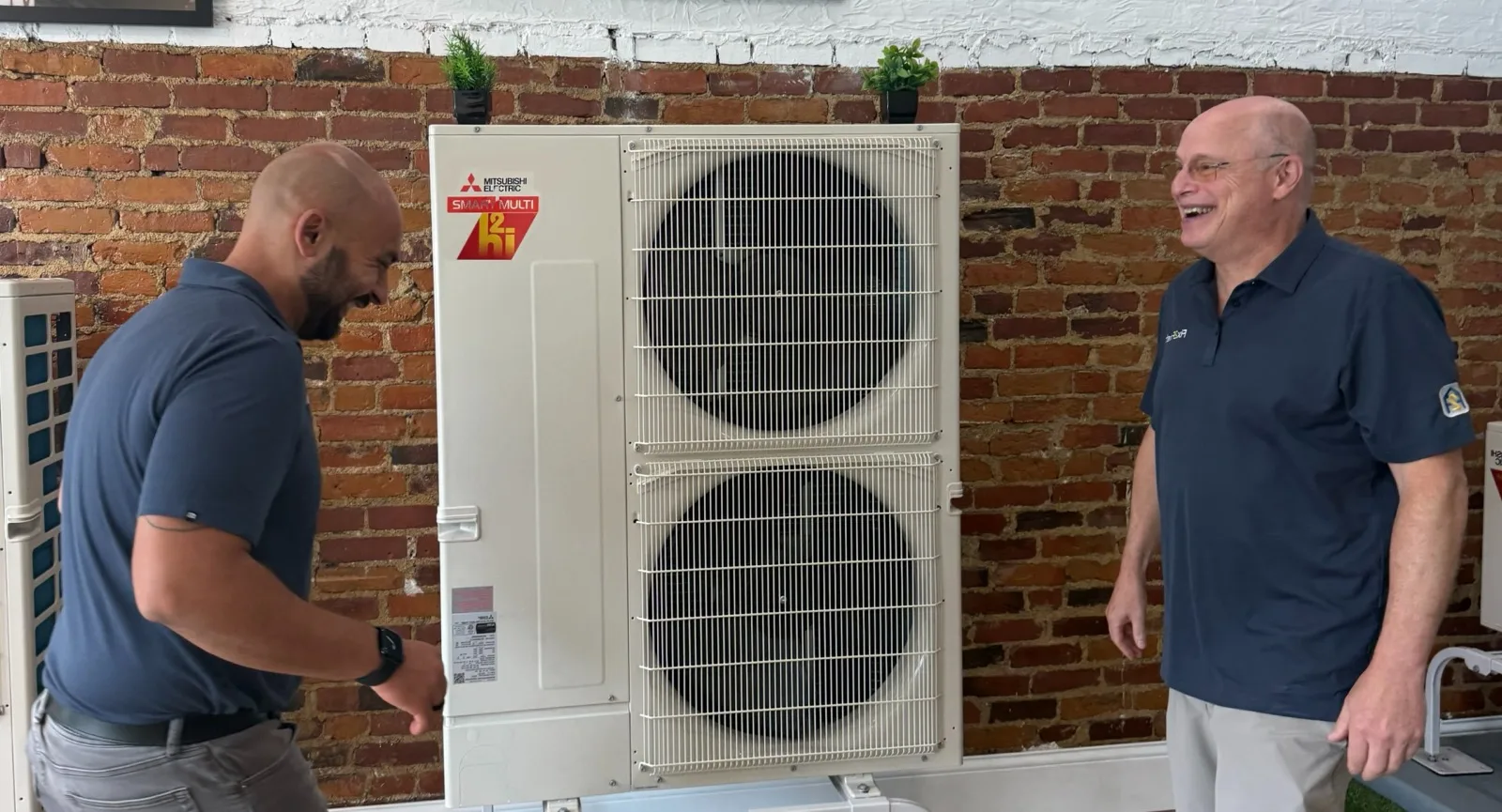
Stephen Akian
15 years in home services, and still in it. He runs Akian Plumbing, Heating, Cooling and Electric in the Boston area, an eight-figure business: 20,000 customers, 50,000 work orders, crews, trucks, payroll, the whole thing.
He makes the same decisions you're making. Which software to buy and which to rip out. What to do when the phone rings after hours and nobody picks up. Whether the new hire is worth another month. The uniforms differ. The decisions don't.
Eric Karofsky
20+ years leading digital programs for companies like Michelin, Royal Caribbean, Fidelity, and The Broad Institute of MIT and Harvard.
A frequent speaker on AI innovation and adoption.
He starts with what the business needs and who has to use it, then builds something that people will actually use and that pays for itself.
Who this is for
Owners and operators of small and mid-size businesses.
Home services, construction, manufacturing, distribution, professional services, clinics and practices, restaurants and retail groups, logistics. If you run the place, this is for you.
Questions
Who should come?
Does it matter what industry I am in?
Do I need to be technical?
Do I need to bring numbers?
What do I actually leave with?
Do you sell me something at the end?
Do you work with our existing software?
Talk to us
Tell us what you're dealing with and we'll follow up. No pitch. If we're not the right fit, we'll say so.